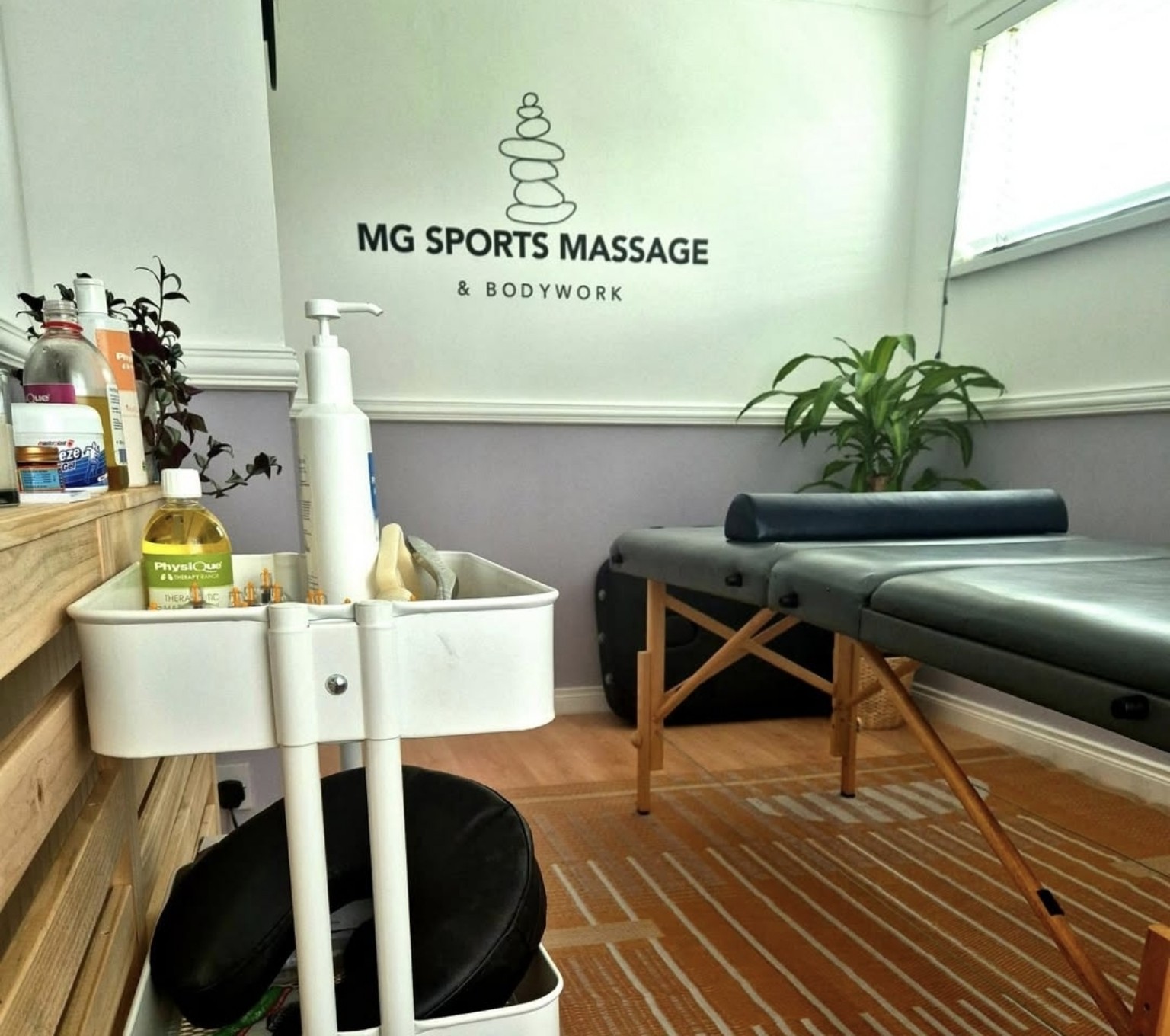
I specialise in TMJ and jaw-related muscle pain, as well as sports, deep tissue and remedial massage. Jaw tension can often go hand in hand with headaches and migraines, facial tension and neck pain, making everyday things like eating, talking and yawning uncomfortable. My aim is to ease that tension, work on the areas contributing to your discomfort and help you feel more comfortable in your body.
Treatments offered
TMJ & Buccal, sports/deep tissue, remedial, and Myofascial Energy work
-
TMJ & Buccal Massage
Targeted, tailored treatment aimed at jaw-related pain and tension. Headaches, migraines and tight temples can sometimes be associated with jaw tension. Treatment addresses jaw aching, clenching or grinding (bruxism), clicking and facial tightness, using external massage and, where appropriate, buccal techniques. Jaw-related tension can also be felt around the head and neck, so treatment considers the wider pattern rather than just the jaw itself. Each session is adapted to your symptoms and comfort. Find out what’s going on when your jaw hurts.
-
Sports & Deep Tissue Massage
Sports massage: A focused treatment for active bodies, whether you’re training, preparing for an event or recovering afterwards. It works on areas that are tight or overworked to support recovery and help you move comfortably.
Deep tissue massage: Uses slower, more sustained pressure to work into deeper layers of muscle and surrounding tissue. It can be useful for persistent areas of tension and those stubborn, tight spots.
-
Myofascial Energy Release style
A slower, more mindful style of bodywork working with the muscles and connective tissues throughout the body. It uses slow, medium to firm pressure, always tailored to your liking and working closely with your breath. The pace and pressure give you time to settle into the treatment rather than brace against it.
It can help ease feelings of muscular tension, encourage relaxation and body awareness, and leave you feeling more comfortable and at ease in your body.
-
Remedial massage
Remedial massage is a more focused treatment aimed at addressing specific areas of pain, tension or restriction. Using techniques such as trigger point therapy, myofascial release, soft tissue work and targeted stretching, treatment may also include cupping, dry needling or IASTM where appropriate. Everything is tailored to what your body needs rather than following a set routine. If I feel you'd benefit from seeing another healthcare professional, such as a physiotherapist, GP or osteopath, I'll always be happy to point you in the right direction.
What's going on when your jaw hurts
Understanding jaw pain, the muscles involved and what might be causing it.
Myofascial jaw pain
One of the common causes of jaw pain is myofascial pain, which comes from the muscles involved in chewing and the surrounding connective tissue, known as fascia.
Think of fascia like a close-fitting sleeve around a muscle, helping the different layers move smoothly against each other.
Your jaw muscles work constantly when you chew, talk, yawn and swallow. Repeated clenching, grinding or holding tension can leave them overworked and sensitive. The pain isn't always felt directly in the jaw either. It can spread into the cheeks, temples, around the ears and down into the neck, sometimes alongside headaches.
But muscles aren't always to blame
Jaw pain can also come from the joint itself, including problems with the small disc inside it, inflammation, arthritis or injury. Dental problems, such as tooth infections, can cause pain around the jaw too.
Sometimes there's a combination of muscular and joint problems, so it's important not to assume all jaw pain has the same cause.
The main muscles involved
-
Masseter
The thick muscle at the corner of your jaw. It helps you bite and chew and can become sore with repeated clenching or grinding.
-
Temporalis
The fan-shaped muscle across your temple. It helps close the jaw and can contribute to temple pain and headaches.
-
Pterygoids
Deeper muscles that help control jaw movement, including opening and moving from side to side.
Your jaw muscles are small but work hard. Clenching your teeth is a bit like holding a fist shut all day. You might not notice you're doing it, but eventually those muscles can start to ache.
Not every jaw problem is muscular, and massage isn't the answer to everything. Where muscle tension is contributing to your discomfort, hands-on treatment may help. If I think something needs further assessment, I'll always point you towards the appropriate healthcare professional.
Jaw-related symptoms
Common signs, less obvious symptoms and when to seek advice.
You won't necessarily experience all of these. Symptoms vary depending on what's affecting the jaw, and some can have other causes too.
Common symptoms
These are some of the symptoms most often associated with TMD.
- Jaw ache or tendernessPain around the jaw joint, cheeks or chewing muscles, often worse when using the jaw.
- Headaches and migrainesHeadaches, often around the temples, are commonly reported. Migraine can occur alongside TMD, although jaw problems aren't necessarily the cause.
- Pain when chewing or yawningEating, talking or opening your mouth wide can aggravate the discomfort.
- Clicking, popping or grindingNoises when you open or close your mouth. Clicking without pain is common and doesn't necessarily mean there's a problem.
- Stiffness or reduced openingYour jaw feels tight or you can't open your mouth as wide as usual.
- Jaw lockingYour jaw catches or temporarily gets stuck open or closed.
- EarachePain around or in front of the ear, sometimes without an obvious ear problem.
- Face or neck painDiscomfort can spread into the cheeks, temples or neck.
- A tired or aching jawThe muscles can feel fatigued, particularly after chewing or talking for a while.
- Clenching or grindingYou may notice this yourself, or a partner or dentist may spot signs of it.
Other symptoms sometimes reported
These can occur alongside TMD, but may also have other causes and shouldn't automatically be put down to the jaw.
- Ringing or buzzing in the earsTinnitus is reported by some people with TMD, although the link isn't always clear.
- Ear fullness or changes in hearingA blocked or full feeling, or changes in hearing, can sometimes occur. Persistent hearing symptoms should be checked.
- DizzinessSome people report dizziness alongside jaw symptoms, but it can have many different causes.
- A change in the way your teeth meetYour bite may feel different. A new or persistent change should be assessed by a dentist.
- Sleep disturbanceJaw pain can make it harder to get comfortable or sleep well.
When to seek medical or dental advice
- Get prompt advice if you have facial or jaw swelling, fever, or a bad taste alongside tooth or jaw pain, as this may indicate an infection.
- Have a locked jaw, significant difficulty opening your mouth, or pain following an injury assessed by a healthcare professional.
- Seek urgent medical advice for a new or severe headache, particularly with scalp tenderness or changes to your vision.
- New facial weakness or numbness needs urgent medical assessment.
Jaw pain together with chest pain, shortness of breath or pain spreading into your arm can be a sign of a heart problem. Call 999.
What causes it
The habits, health and life factors that can contribute to jaw problems.
Think of it like a bucket slowly filling up. Clenching, stress, poor sleep, injury or an underlying joint problem can all add to the overall load. When the bucket is already near the top, even everyday things like chewing or talking may be enough to bring symptoms on. The mix is different for everyone, and sometimes there's no single obvious trigger.
Habits and jaw loading
- Clenching or grinding, while awake or asleep
- Holding the jaw tense, even when your teeth aren't touching
- Frequent chewing habits: gum, nails, pens or hard, chewy foods
- Prolonged jaw opening, which can aggravate symptoms for some people
Stress, sleep and pain
- Stress and anxiety can increase clenching and make pain harder to manage
- Poor or disrupted sleep can affect how the body manages pain
- Other pain conditions, such as migraine or persistent pain elsewhere, can overlap with TMD
- Individual pain sensitivity: people differ in how their nervous system responds to pain
Joint and health factors
- Jaw joint or disc problems affecting how the joint moves
- Arthritis affecting the jaw joint
- Previous injury to the jaw joint or surrounding tissues
- Individual susceptibility: a combination of biological and personal factors may play a part
Injury and aggravating activities
- A blow or accident involving the jaw or face
- Contact sport or other impact to the jaw
- Dental treatment involving prolonged wide opening may temporarily aggravate symptoms
- Repeated overloading can make an already sensitive jaw more uncomfortable
These factors don't affect everyone in the same way, and some may aggravate symptoms rather than cause the underlying problem. Research does not support the idea that braces or a so-called bad bite are, by themselves, causes of TMD.
How treatment may help
What happens in a session and how it may help your symptoms.
Picture a rope pulled tight at both ends, with a knot in the middle. You can't fix it by yanking harder. You work out where the knot is, ease it loose, and stop pulling. That's what the treatment aims to do for your jaw.
-
Talk and assess
We go through your symptoms, habits and history. I check how your jaw opens and moves, find the tender spots and look at your neck and posture.
-
Hands-on work
Slow, controlled pressure and gentle stretching on the jaw, temples, face, neck and shoulders. Where it helps, and only with your consent, I work inside the mouth (gloved) to reach the deeper muscles.
-
A plan for home
Simple jaw stretches, a relaxed resting position for the jaw, and ways to catch clenching during the day, so the benefit lasts between sessions.
What it may help with
- Easing tight muscles and tender trigger points
- Opening your mouth more easily and comfortably
- Fewer or milder tension headaches
- Less pain in the ears, face and neck
- Calming the urge to clench and grind
- Noticing and breaking habits that feed the problem
Results vary from person to person. Some people feel a difference after one session, others need a short course. This work sits alongside dental and medical care, not instead of it.
What clients say
Prices
TMJ massage and massage/bodywork session prices.
Straightforward pricing, with a choice of session lengths depending on what you need.
TMJ massage
| Session length | Price |
|---|---|
| 60 minutesFor existing TMJ clients only. | £50 |
| 90 minutesA full TMJ session, working from the upper traps upwards. | £65 |
| 120 minutesA full TMJ session, with additional work on the back and/or hips. | £80 |
Massage and bodywork
Sports, deep tissue, remedial and relaxing massage.
| Session length | Price |
|---|---|
| 45 minutesUsually focused on one body area. | £40 |
| 60 minutesFor example, back, neck and shoulders. | £45 |
| 90 minutesFull posterior chain. | £65 |
| 120 minutesHead-to-toe treatment. | £80 |
Not sure which session to book? Get in touch and I'll point you in the right direction.
Book hereCommon questions
A few things you might want to know before booking.
Will it hurt?
Sometimes you might feel some tenderness when we find a trigger point or an area of muscle that's particularly sensitive. It can even be surprising where you feel it, as trigger points can refer pain or sensations to other parts of the body. This can help us connect the dots and build a better picture of what's going on. The aim is to make those “spicy” areas feel a little more mild, not to push through pain. We can always adjust the pressure or approach, with your comfort and tolerance in mind.
Do you really work inside the mouth?
Sometimes, because some of the key jaw muscles can't be reached from the outside. It's always gloved, always explained first, and only with your consent. If you'd rather not, we can work externally and still get a lot done.
How many sessions will I need?
It depends on how long the problem has been there and what's driving it. After the first session I can give you an honest idea of what to expect.
What if the problem is in the joint itself?
Massage works on muscle and soft tissue, not on a damaged joint or disc. During assessment I'll look for signs that something else is going on, and I'll point you to the right person if so.
How might I feel afterwards?
Many people feel more relaxed after a TMJ session, with less tension around the jaw, face and temples. You might notice your jaw feels lighter, moves more freely or feels more comfortable when eating and talking. Some people also notice a reduction in associated head, neck or facial tension.
It's also normal to feel a little tender or sensitive in areas we've worked on, particularly if the muscles were already quite irritable. You might experience temporary aching, a feeling of fatigue around the jaw or mild soreness that can last a day or two.
Occasionally, symptoms may feel a little more noticeable before settling. This doesn't necessarily mean anything is wrong, but treatment shouldn't leave you feeling significantly worse.
Take it easy for the rest of the day, stay hydrated and avoid overworking your jaw if it's feeling tender. Gentle, comfortable movement is usually better than forcing stretches or repeatedly testing how far your jaw will open.
Remember: Everyone responds differently. Let me know how you feel afterwards, particularly if anything is unexpected or doesn't settle. You can also read about other clients' experiences in our Google reviews.
I'm not really sure what service to book
That's absolutely fine. If you're unsure what would suit you best, feel free to send me a message on Instagram and I'll be happy to point you in the right direction.
It's also no problem to go ahead and book a session and then decide on the day that you'd prefer a different option. We can have a chat when you arrive and always pivot or adjust the treatment to suit how you're feeling and what you need.
About me
My story, and why I do this work.
My interest in TMJ dysfunction and bodywork is quite personal. I've struggled with jaw tension, headaches, neck and shoulder pain and migraines for as long as I can remember.
On my 13th birthday, I experienced my first full-blown migraine with aura. For anyone who hasn't experienced it, aura can cause temporary visual disturbances, such as flashing lights, blind spots or zigzag patterns, before or during a migraine. Unfortunately, it wasn't to be my last.
When I started my journey into sports massage, I quickly noticed a pattern in a surprising number of my clients. Neck and shoulder tension, tight jaw muscles, teeth grinding (bruxism), headaches, tinnitus and migraines. Often accompanied by a fairly impressive amount of stress and anxiety. The kind that could have killed a Victorian peasant.
What really caught my attention was how familiar it all seemed. I'd spent years dealing with many of these symptoms myself without ever making the connection between jaw tension, teeth grinding and my headaches and migraines.
Dentists had advised me to wear a nightguard to protect my teeth, while doctors had prescribed medication to help manage my symptoms. But nobody had really joined the dots and explored the muscular side of things.
That experience sparked a real interest in understanding the relationship between the jaw, head, neck and surrounding muscles. I started putting more time into learning, further training and developing my approach to treating TMJ-related myofascial pain.
I'm now 2 years and 6 months symptom-free. I don't believe there was one magic fix. For me, recovery has been a combination of addressing persistent tension in my jaw muscles, recognising stress and triggers, gentle exercise, staying hydrated and learning to listen to my body before tension gets a grip.
My own experience has taught me that there's no one-size-fits-all approach to pain. Everyone has their own history, circumstances and contributing factors. I like to take the time to understand the person in front of me rather than simply treat whatever happens to be sore.
Sometimes that means adapting treatment, trying a different approach or recognising that massage isn't necessarily the answer. I'm more than happy to recommend someone sees their GP, dentist or another healthcare professional when I feel further investigation is needed. I don't believe in trying to make massage the solution to everything.
Ultimately, I'm genuinely interested in how the body works, how things connect and why people experience pain in different ways. It's what got me into this line of work, and it's what keeps me interested in it.
Sometimes, joining the dots is a pretty good place to start.
Book a session
Due to demand, the wait for a first appointment is currently around 6–10 weeks. I'd recommend booking now to secure your place, then joining the cancellation waitlist in case an earlier slot becomes available.
If you're hoping to become a regular client, it's worth booking at least two sessions in advance.